Cody Lee is a global citizen living in Southern California; investigating art, architecture, museums, and visual culture; educated in art history and in museum studies; experienced in art museum administration and communications.
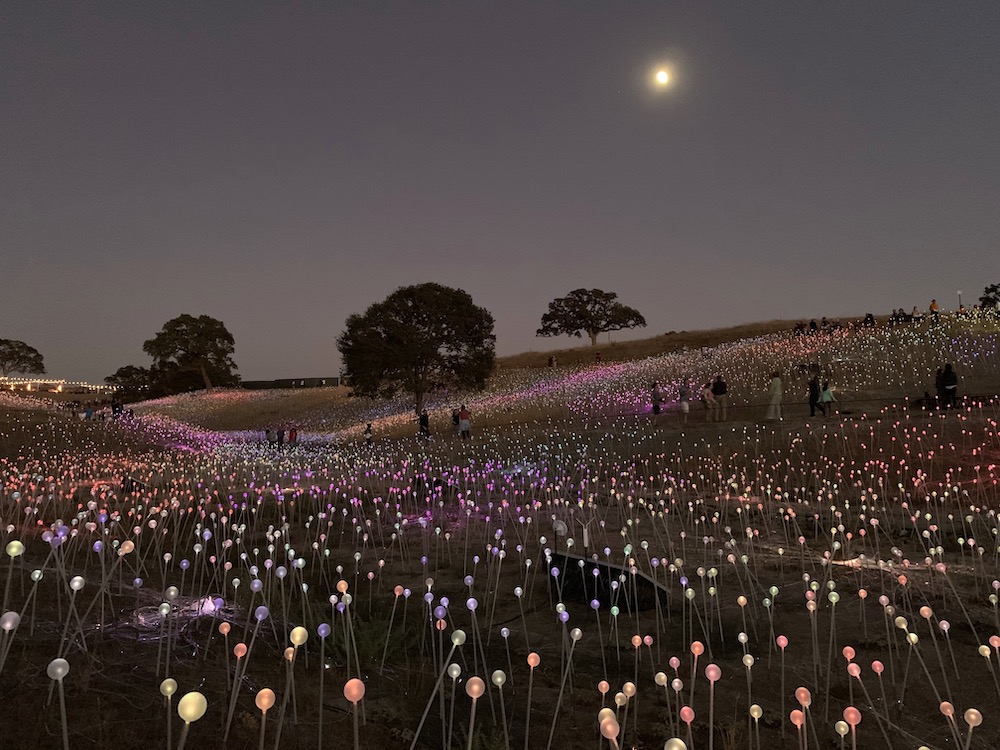
In Paso Robles, California, a hillside meadow is illuminated each night with thousands of colorful glowing orbs. The temporary installation, Field of Light, is the latest and largest version of the itinerant project by Bruce Munro.
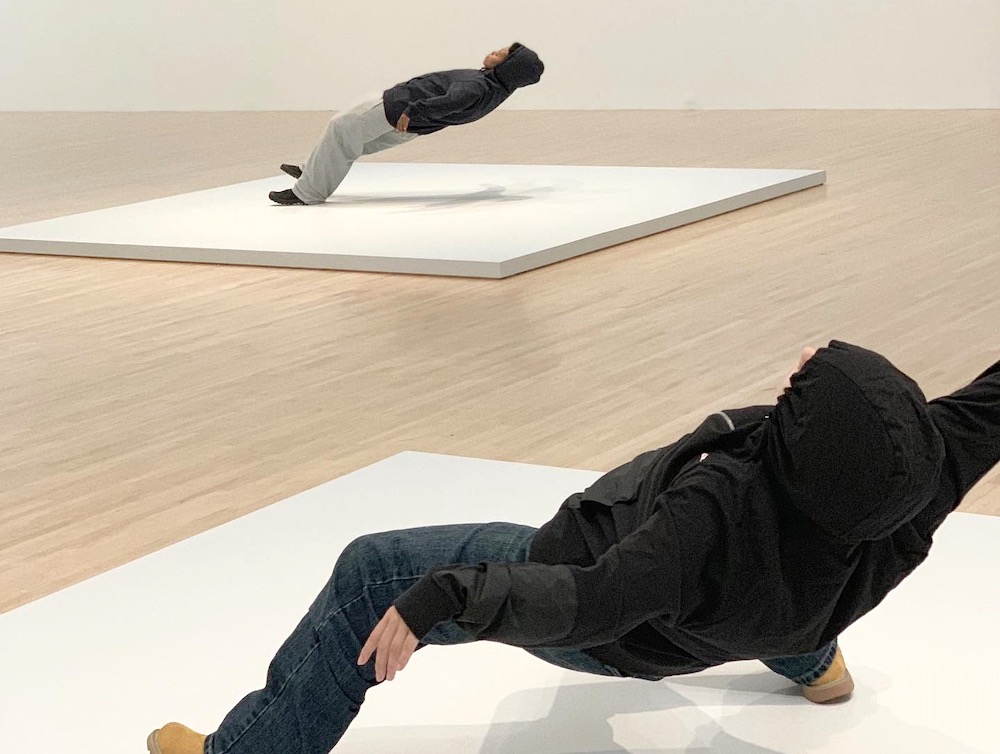
The Museum of Contemporary Art (MOCA) in Los Angeles has acquired a work of performance art by the multimedia artist Xu Zhen. Titled In Just a Blink of an Eye, it is only the second performance for MOCA’s permanent collection of some 7,000 works of postwar art.
Tarsila do Amaral, Cartão postal, 1929, oil on canvas, coleção particular, Rio de Janeiro
At the Museu de Arte de São Paulo (MASP), Tarsila Popular is the largest exhibition ever dedicated to one of the great Brazilian artists of the 20th century. In Tarsila’s hometown, and in one of the most significant museums in Latin America, the exhibition brings together 92 works that contextualize race, class, and post-colonialism in Brazilian Modernist painting.
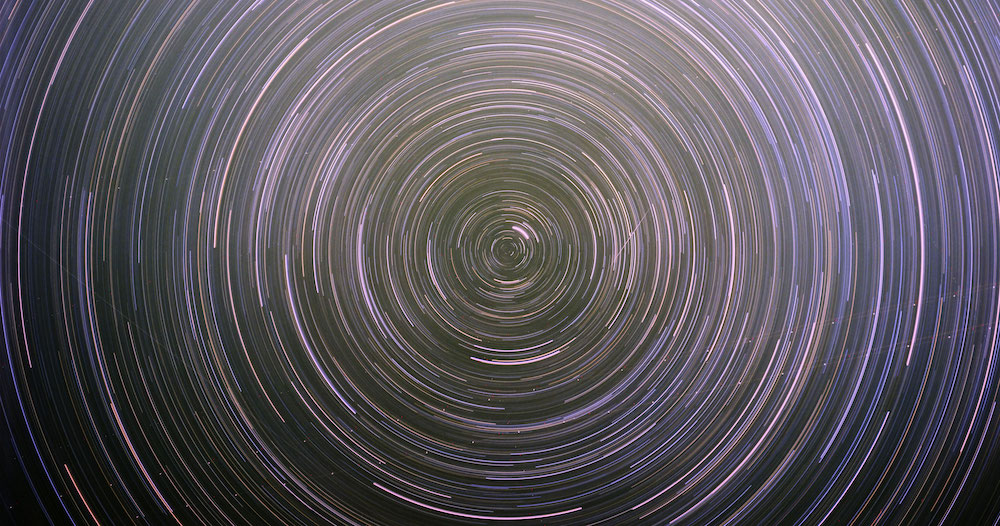
At 10:34 a.m. on December 3, 2018, the SpaceX Falcon 9 rocket launched from Vandenberg Air Force Base in California. Two hours later, 350 miles above Earth’s surface, it released 64 satellites into orbit for the largest satellite launch in US history. One of those, Orbital Reflector, will be the first “purely artistic” object in space.
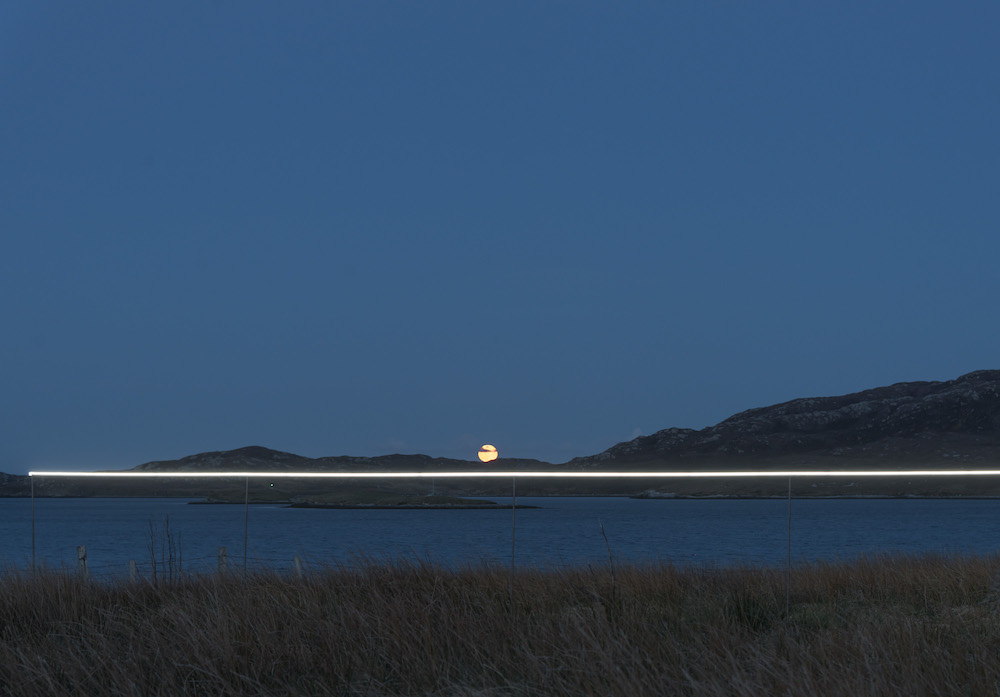
Pekka Niittyvirta and Timo Aho, Lines (57° 59′N, 7° 16’W), 2018-19, Taigh Chearsabhagh Museum & Arts Centre, image courtesy of Pekka Niittyvirta and Timo Aho
On the island of North Uist, in the Outer Hebrides archipelago on the northwest coast of Scotland, a site-specific installation shows the impact of future climate change with a visual reference to rising sea levels.
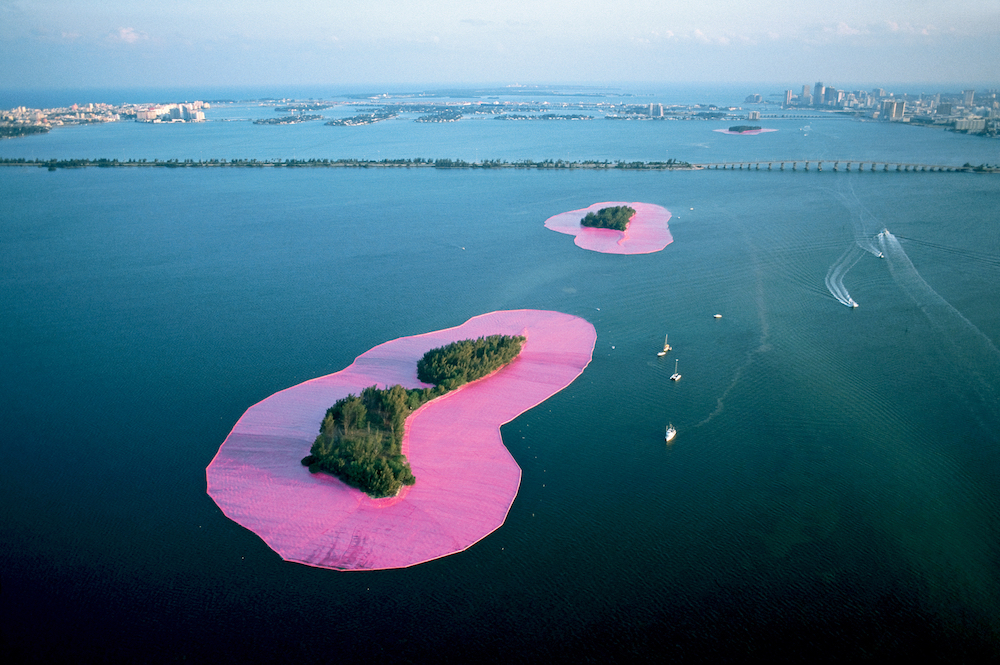
In May of 1983, eleven islands in Miami’s Biscayne Bay were surrounded with 6.5 million square feet of floating pink fabric. It was an incredibly vibrant spectacle – green islands, pink fabric, turquoise water, and blue skies – realized by the conceptual and environmental artists Christo and Jeanne-Claude. The project, Surrounded Islands, is the subject of an exhibition now at the Perez Art Museum Miami (PAMM).
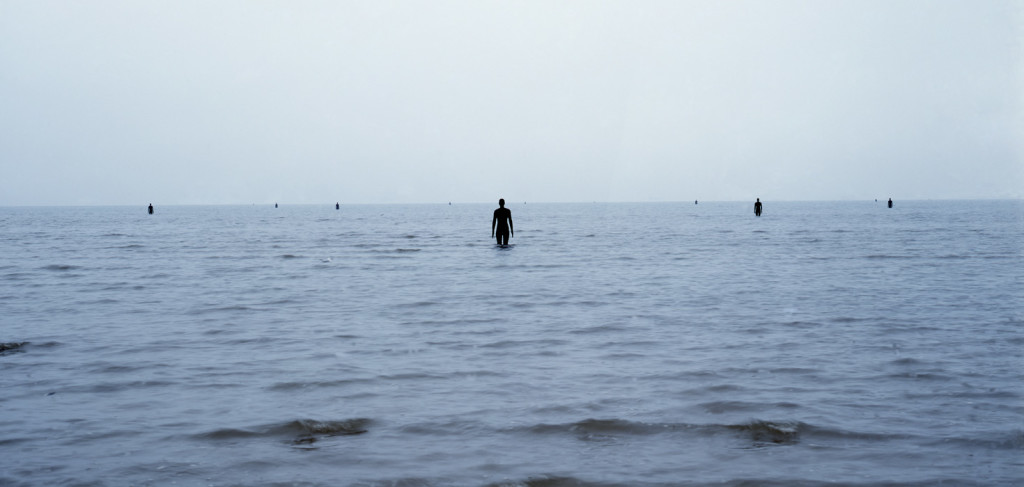
In 1997, in Cuxhaven, Germany, the British sculptor Antony Gormley installed ANOTHER PLACE, a sculpture comprised of 100 life-sized iron figures, along the coast between the North Sea and the mouth of the Elbe River. The figures were spread 2.5 kilometers down the coast and a kilometer out to sea, facing the horizon and becoming submerged with the tides each day in September and October of that year.
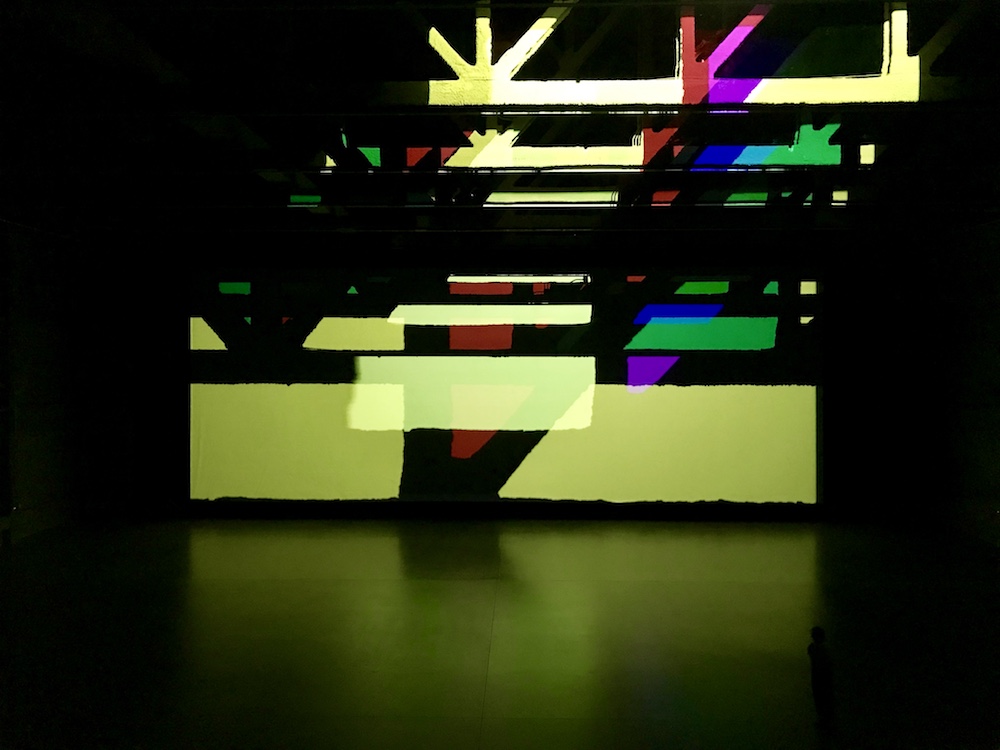
At the Marciano Art Foundation in Los Angeles, a massive installation by Ólafur Elíasson creates an immersive experience that, unusually these days, encourages visitors to take their time inside the space.
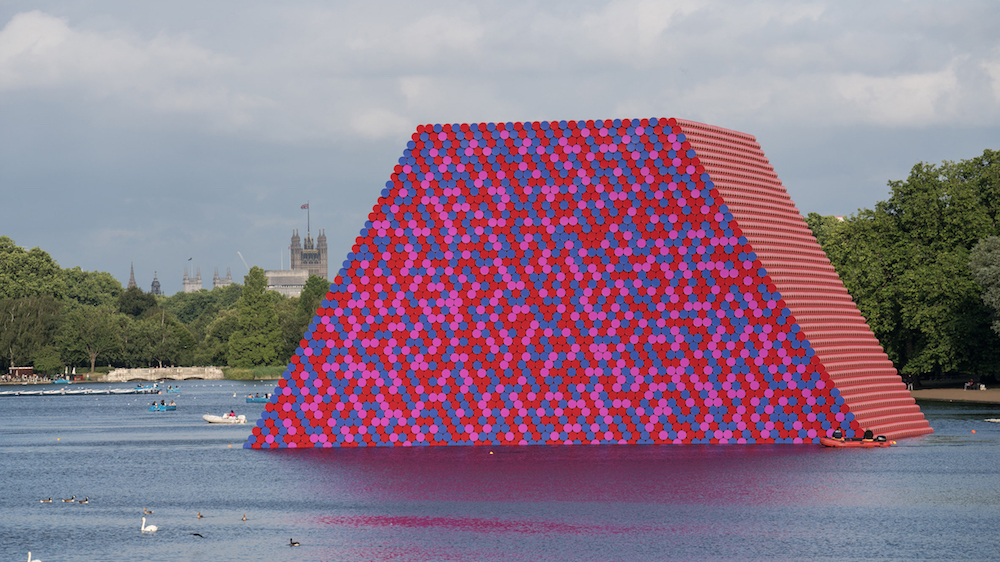
Christo and Jeanne-Claude, The Mastaba (Project for London, Hyde Park, Serpentine Lake), 2016-2018, photo by Wolfgang Volz
In London’s Hyde Park, a monumental form floating on the Serpentine Lake is a feat of engineering and a spectacle many years in the making. Titled The Mastaba (Project for London, Hyde Park, Serpentine Lake), it is a temporary installation by the conceptual and environmental artists Christo and Jeanne-Claude.
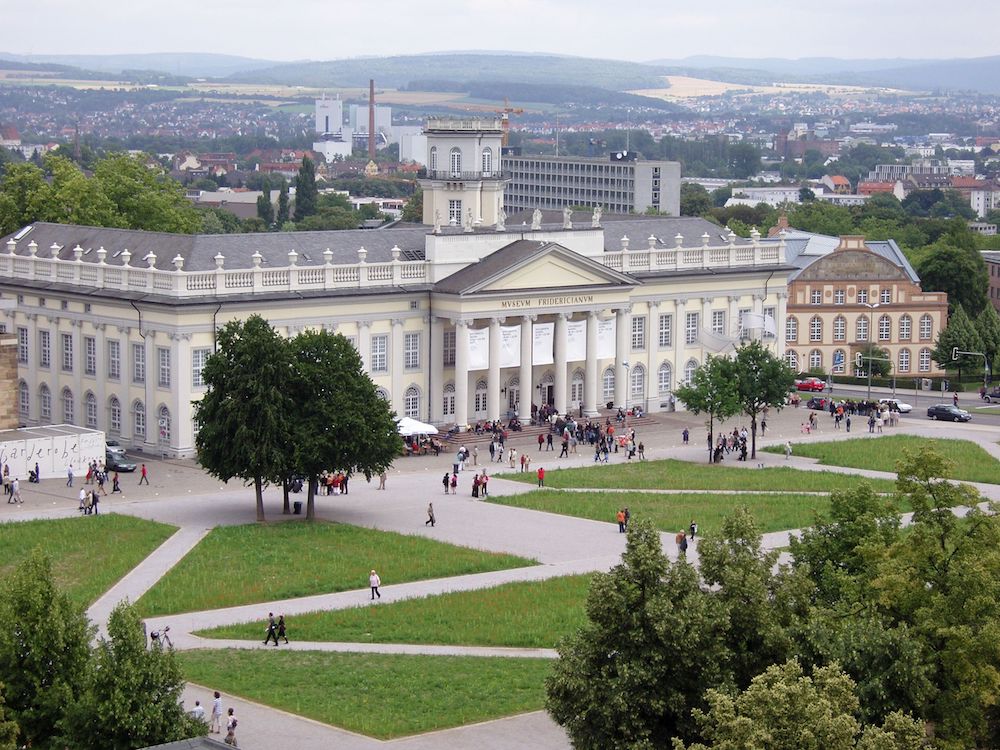
The Friedrichsplatz and Fridericianum, Kassel, Germany, photo by Carroy via Wikimedia Commons
Every five years in Kassel, Germany, documenta is a contemporary art exhibition lasting 100 days. Each edition presents hundreds of works in and around the city, typically conceptual and frequently site-specific. Of the thousands of works shown since the first documenta in 1955, sixteen have become permanent installations in Kassel.
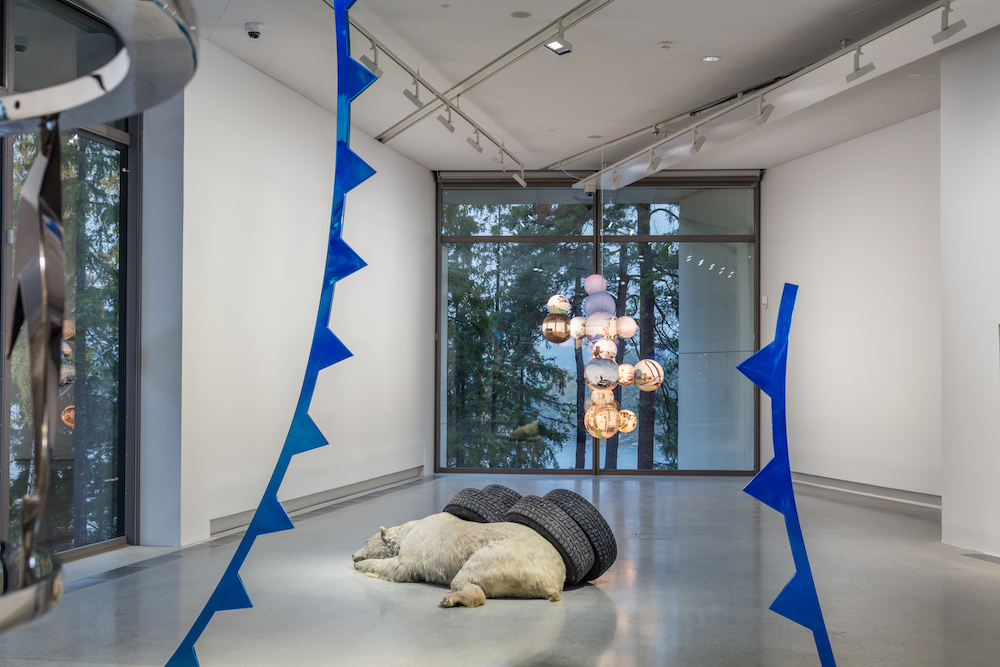
Bigert and Bergström, I stormens öga, installation view, 2017; photo by Jean-Baptiste Béranger, courtesy of Artipelag
At Artipelag, a museum overlooking a bay in the Stockholm archipelago, an exhibition by Mats Bigert and Lars Bergström considers the intersection of culture and climate change. I stormens öga (In the storm’s eye) comprises works from 1990 to 2017 focusing on weather, climate, and human activity.
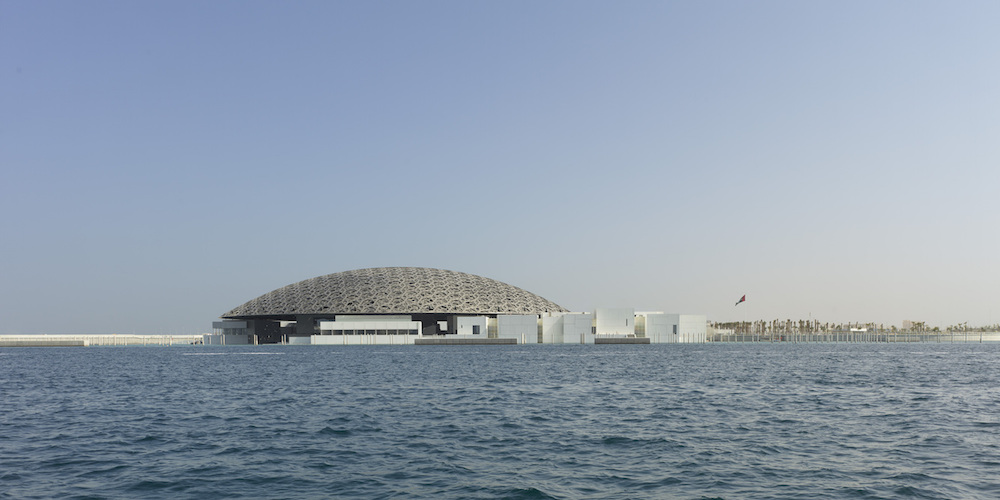
On November 11, the Louvre Abu Dhabi opened on Saadiyat Island, a cultural district off the coast of the capital city of the United Arab Emirates. The museum was designed by the French architect Jean Nouvel and is the result of a €1 billion agreement between Abu Dhabi and France.
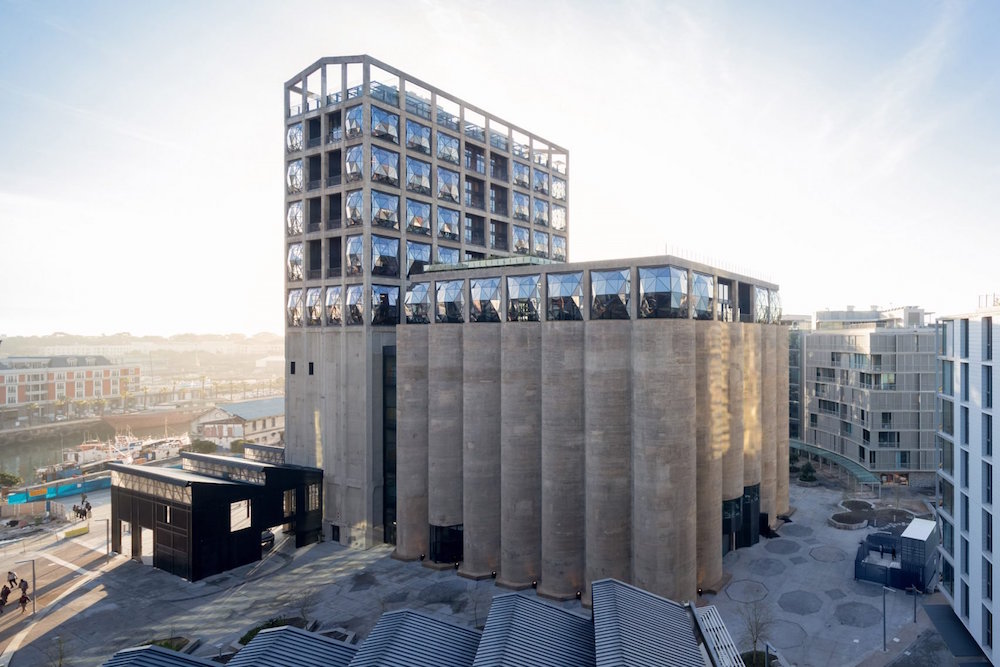
On September 22, the Zeitz Museum of Contemporary Art Africa (MOCAA) opened in Cape Town, South Africa. It’s a major development, locally and globally, and is described in superlatives: the first major contemporary art museum in Africa; the largest museum to open in Africa in a century; and the largest contemporary African art museum in the world.
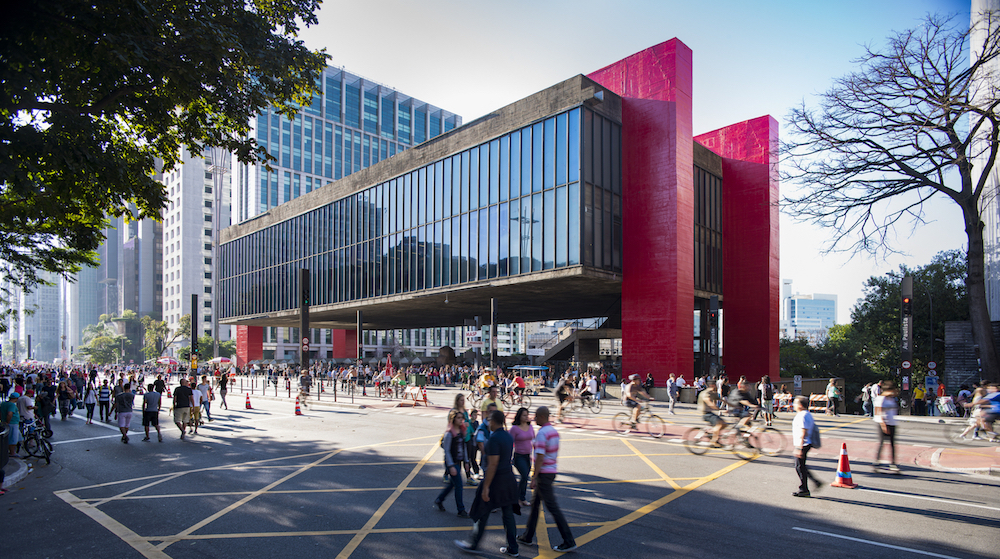
The Museu de Arte de São Paulo (MASP) has received a grant from the Getty Foundation to support a plan for the long-term care and maintenance of its landmark Brutalist building. The museum has the most important art collection in Latin America, but is most recognized for its modernist architecture and installation design.
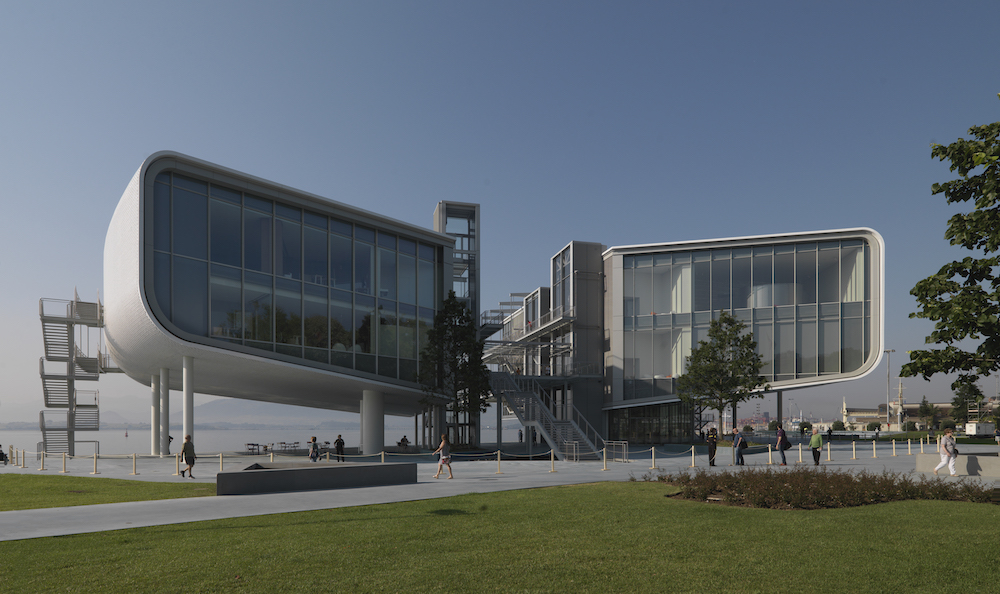
Centro Botín; photo by Enrico Cano, courtesy of Centro Botín
In Santander, about 60 miles west of Bilbao on Spain’s north coast, the new Centro Botín opened on Friday, June 23. The waterfront arts center was designed by Renzo Piano as a new regional museum along with the redevelopment of an urban park.