Instituto Inhotim

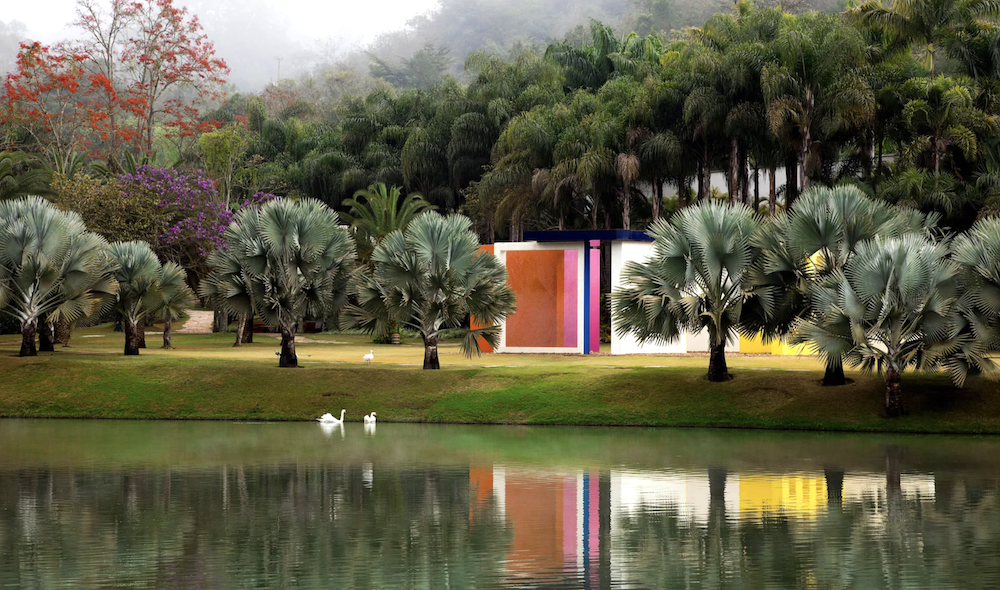
Hélio Oiticica, Invenção da cor, Penetrável Magic Square #5, De Luxe, 1977, photo by Eduardo Eckenfels, courtesy of Instituto Inhotim

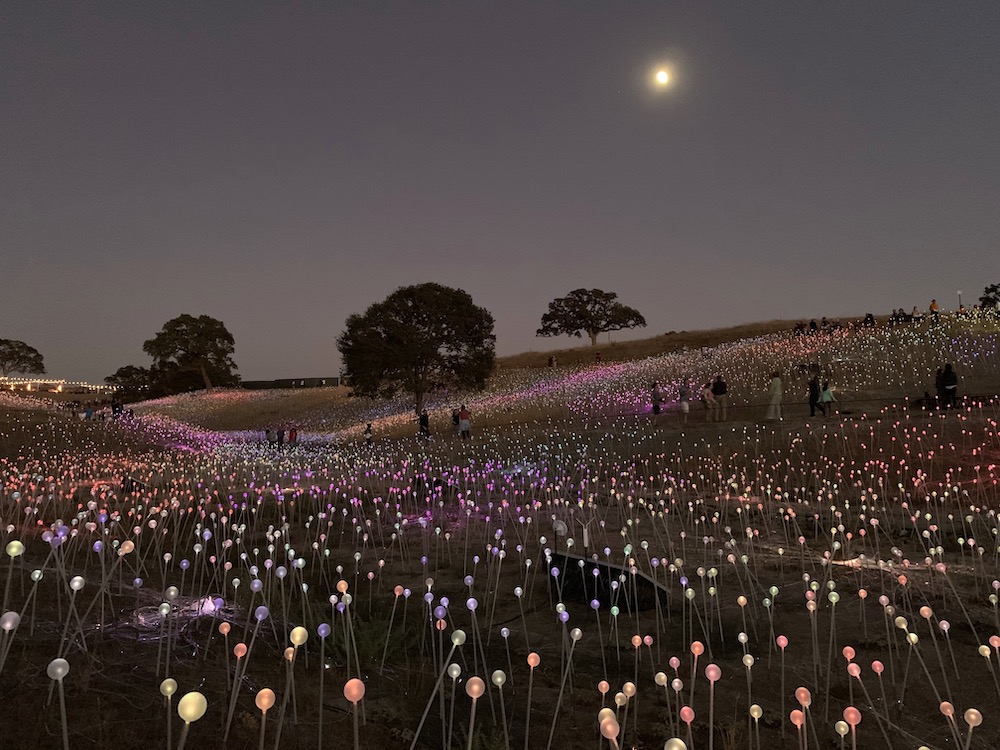
Near Brumadinho, Brazil, about 60 kilometers from Belo Horizonte in the state of Minas Gerais, the Instituto Inhotim is an open-air museum that combines art and nature with site-specific contemporary art in a sprawling landscape of botanical gardens. 

Continue reading “Instituto Inhotim”
Benoît Pype, Le Sablier Millénaire

Benoît Pype, Le Sablier Millénaire, 2021, hand blown glass and coal-tar pitch, 30 x 40 centimeters, Collection Carmignac, photo by Laurent Blevennec via Studio Benoît Pype

In the Palais de l’Élysée, the 300-year-old palace that is the official residence and office of the president of France, a conceptual work of art by the artist Benoît Pype is a recent addition to more than 5,000 arts décoratifs, 500 works of art, and 100 clocks from the collections of the Mobilier National. In one of the 365 gilded rooms once home to Madame de Pompadour, Napoleon Bonaparte, and Charles de Gaulle before Emmanuel Macron, Pype’s Le Sablier Millénaire (Millenium Hourglass) proposes a much longer potential history.

Continue reading “Benoît Pype, Le Sablier Millénaire”

City

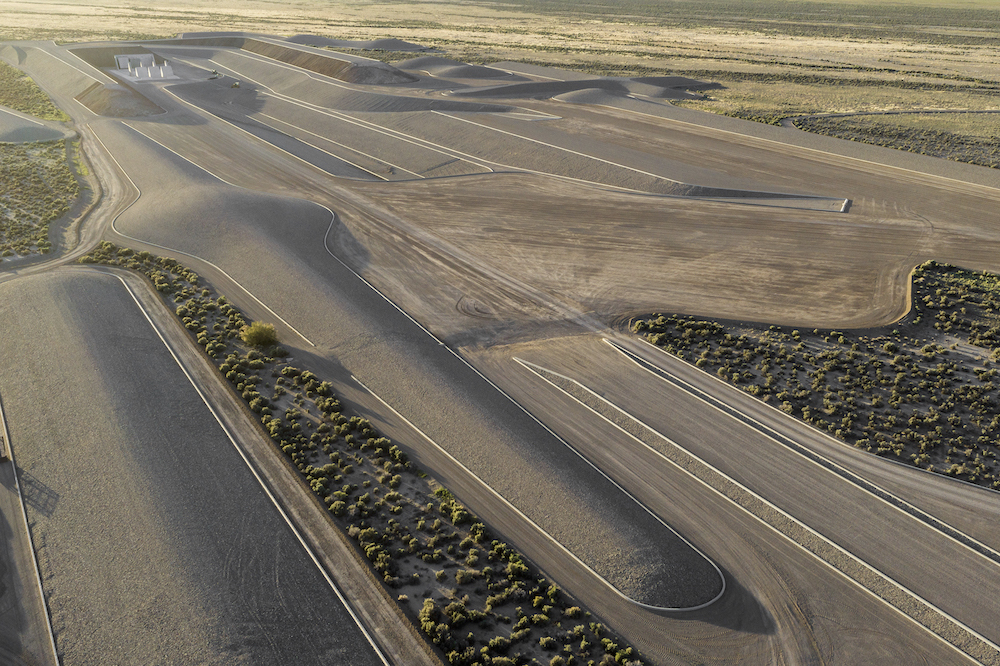
Michael Heizer, City, 1970-2022, photo by Eric Piasecki, © Michael Heizer / Triple Aught Foundation

In a remote valley of central eastern Nevada, a complex of shaped landmasses and monolithic structures is thought to be the largest sculpture in the world. Composed of rocks, compacted dirt, and concrete, a mile and a half long and half a mile wide, Michael Heizer’s City is a vast work of Land Art.

Continue reading “City”

Santiago Arau. Territorios

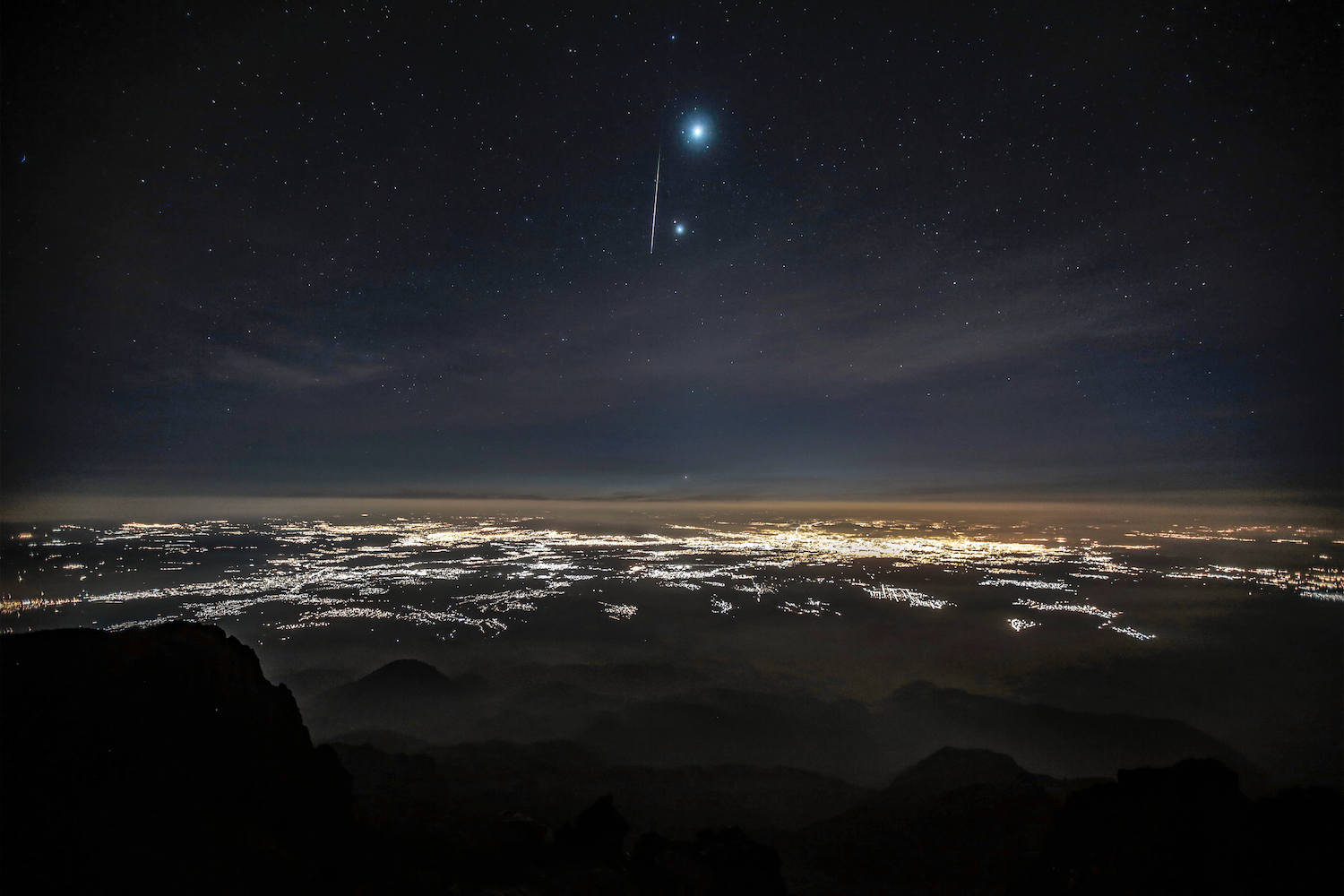
Santiago Arau, Puebla desde el Iztaccíhuatl, 2019, color digital print, image courtesy of Museo Amparo
Santiago Arau, Puebla desde el Iztaccíhuatl, 2016, color digital print, image courtesy of Museo Amparo

For seven years, a man explored the length, width, and height of the territory of Mexico. He traveled 33,302 kilometers, documenting the borders, cities, mountains, and volcanoes that shape the country. The explorer, Santiago Arau, is a photographer and filmmaker whose project, Territorios, is the subject of an exhibition at the Museo Amparo in Puebla.

Continue reading “Santiago Arau. Territorios”

Tatiana Bilbao Estudio

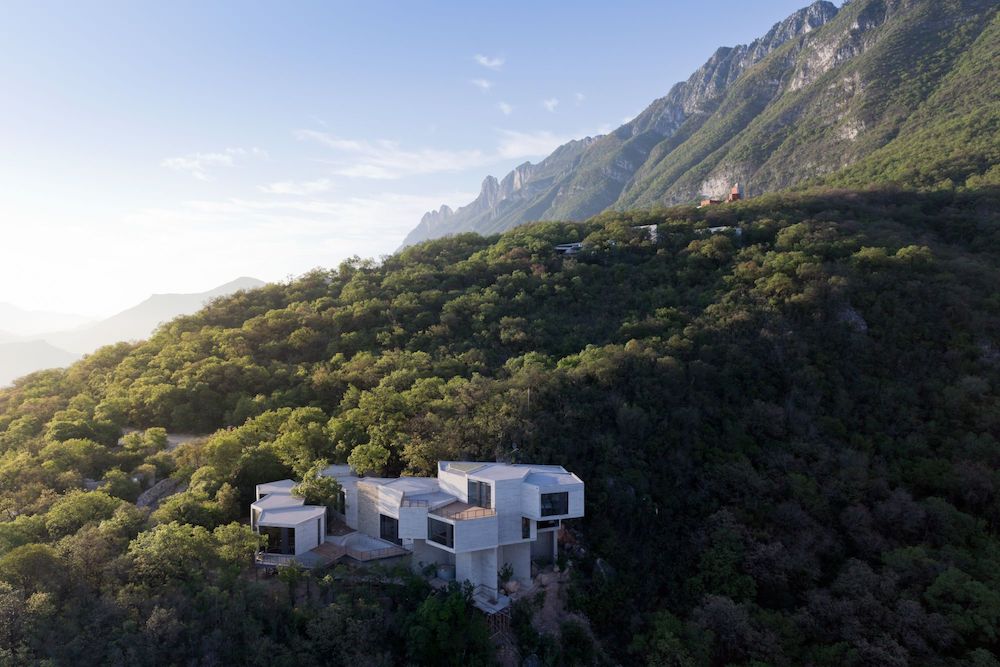
Tatiana Bilbao Estudio, Villa Ventura, 2011; photo by Iwan Baan, courtesy of Louisiana Museum of Modern Art

At the Louisiana Museum of Modern Art in Denmark, The Architect’s Studio – Tatiana Bilbao Estudio is the third installment in a series of monographic architecture exhibitions that explore globalization, sustainability, and social challenges. With drawings, collages, models, and materials, the exhibition reveals the philosophies and processes of the Mexico City-based architecture team.

Continue reading “Tatiana Bilbao Estudio”

FOR FOREST

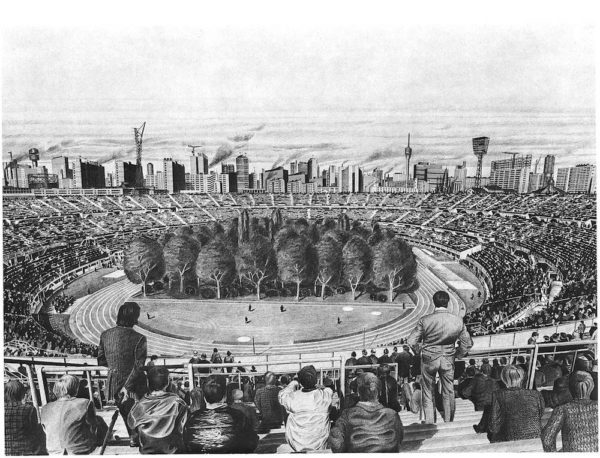
Max Peintner, Die ungebrochene Anziehungskraft der Natur, 1970/71, pencil drawing. © Max Peintner

In 1970, the Austrian artist and architect Max Peintner imagined a small forest contained within a stadium in a drawing titled The Unending Attraction of Nature. In it, a sprawling, smoky, industrial city has subsumed the natural world, and thousands of spectators pack the stadium to look at a few hundred trees.

Continue reading “FOR FOREST”

Orbital Reflector

Trevor Paglen, Nine Reconnaissance Satellites over the Sonora Pass, 2008, C-Print, 48 x 60 inches; courtesy of Trevor Paglen, Metro Pictures, New York; Altman Siegel, San Francisco; © Trevor Paglen

At 10:34 a.m. on December 3, 2018, the SpaceX Falcon 9 rocket launched from Vandenberg Air Force Base in California. Two hours later, 350 miles above Earth’s surface, it released 64 satellites into orbit for the largest satellite launch in US history. One of those, Orbital Reflector, will be the first “purely artistic” object in space.

Continue reading “Orbital Reflector”

Lines (57° 59′N, 7° 16’W)

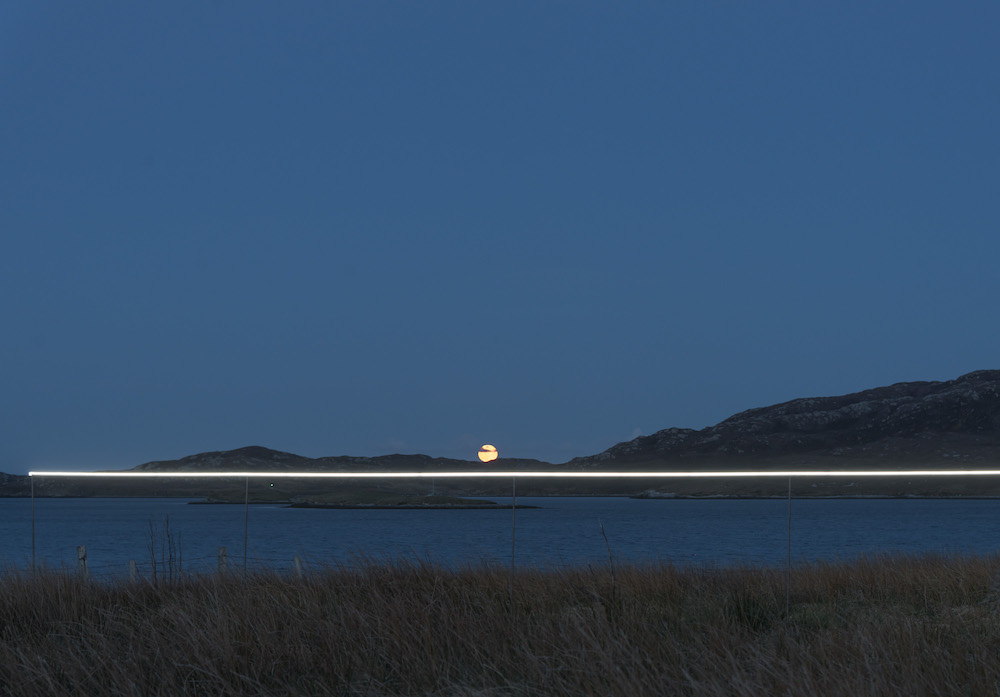
Pekka Niittyvirta and Timo Aho, Lines (57° 59′ N, 7° 16’W), 2018-19, Taigh Chearsabhagh Museum & Arts Centre, image courtesy of Pekka Niittyvirta and Timo Aho
Pekka Niittyvirta and Timo Aho, Lines (57° 59′N, 7° 16’W), 2018-19, Taigh Chearsabhagh Museum & Arts Centre, image courtesy of Pekka Niittyvirta and Timo Aho

On the island of North Uist, in the Outer Hebrides archipelago on the northwest coast of Scotland, a site-specific installation shows the impact of future climate change with a visual reference to rising sea levels.

Continue reading “Lines (57° 59′N, 7° 16’W)”

Surrounded Islands

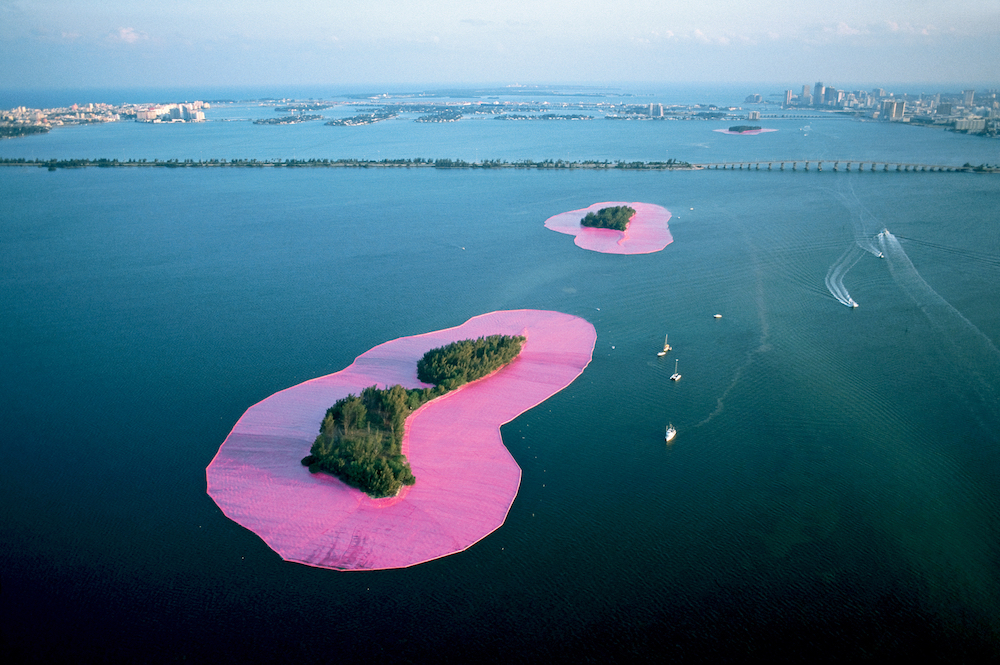
Christo and Jeanne-Claude, documentary photograph of Surrounded Islands, Biscayne Bay, Greater Miami, Florida, 1980–83; photo by Wolfgang Volz, © Christo 1983

In May of 1983, eleven islands in Miami’s Biscayne Bay were surrounded with 6.5 million square feet of floating pink fabric. It was an incredibly vibrant spectacle – green islands, pink fabric, turquoise water, and blue skies – realized by the conceptual and environmental artists Christo and Jeanne-Claude. The project, Surrounded Islands, is the subject of an exhibition now at the Perez Art Museum Miami (PAMM).

Continue reading “Surrounded Islands”