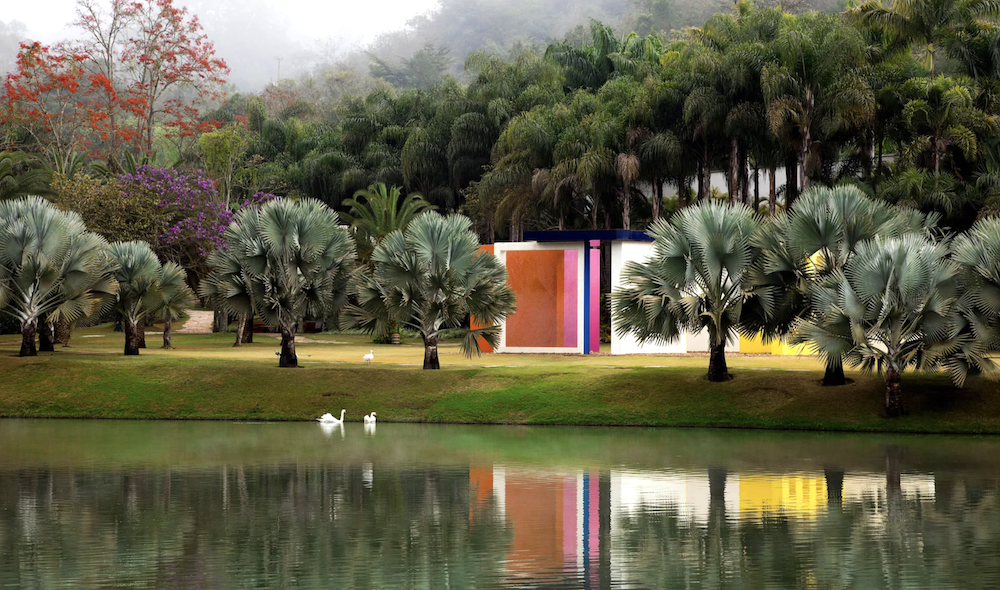
Hélio Oiticica, Invenção da cor, Penetrável Magic Square #5, De Luxe, 1977, photo by Eduardo Eckenfels, courtesy of Instituto Inhotim
Near Brumadinho, Brazil, about 60 kilometers from Belo Horizonte in the state of Minas Gerais, the Instituto Inhotim is an open-air museum that combines art and nature with site-specific contemporary art in a sprawling landscape of botanical gardens.
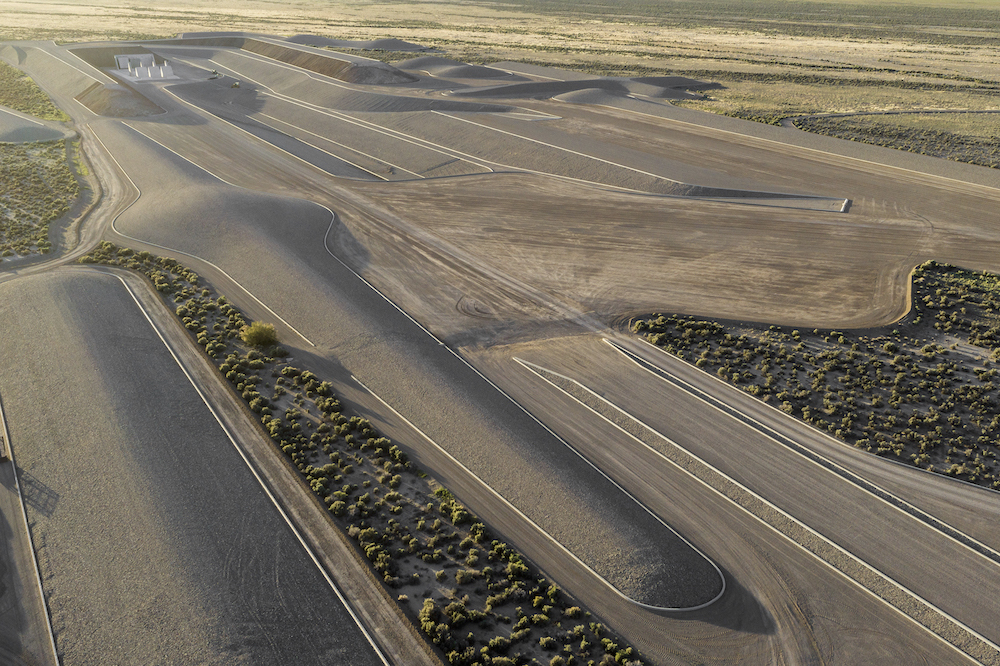
In a remote valley of central eastern Nevada, a complex of shaped landmasses and monolithic structures is thought to be the largest sculpture in the world. Composed of rocks, compacted dirt, and concrete, a mile and a half long and half a mile wide, Michael Heizer’s City is a vast work of Land Art.
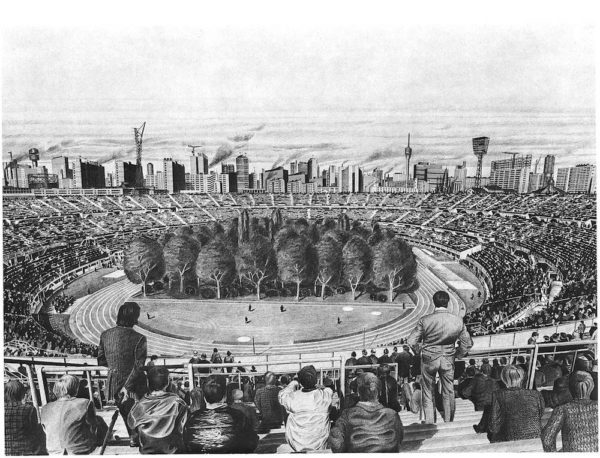
In 1970, the
Austrian artist and architect Max Peintner imagined a small forest contained
within a stadium in a drawing titled The
Unending Attraction of Nature. In it, a sprawling, smoky, industrial city
has subsumed the natural world, and thousands of spectators pack the stadium to
look at a few hundred trees.
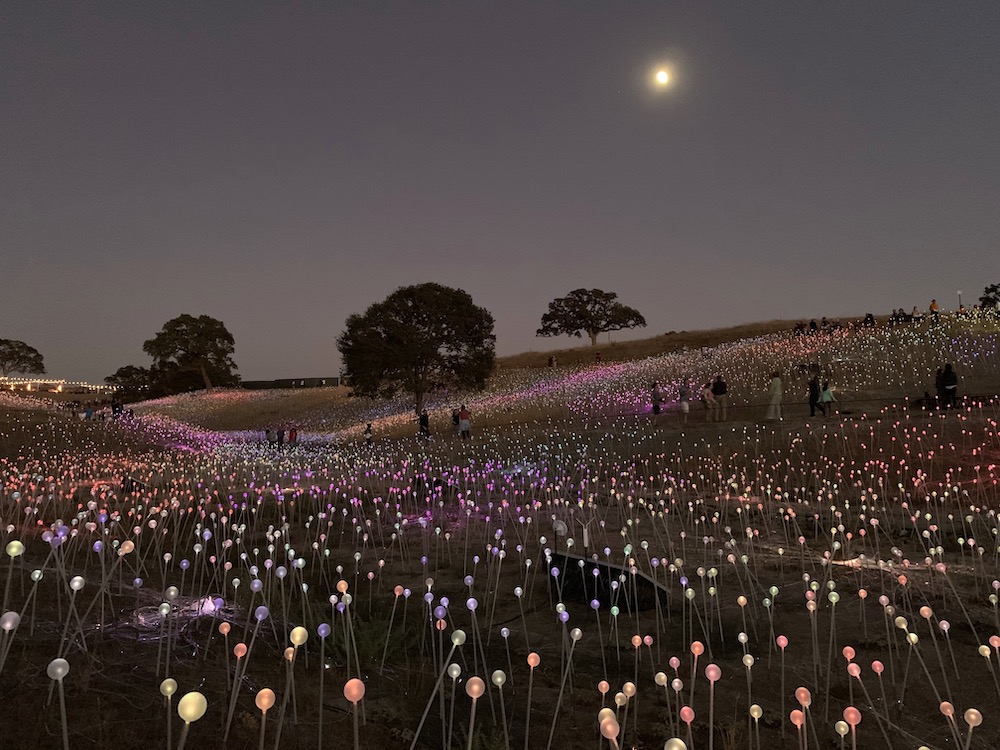
In Paso Robles, California, a hillside meadow is illuminated each night with thousands of colorful glowing orbs. The temporary installation, Field of Light, is the latest and largest version of the itinerant project by Bruce Munro.
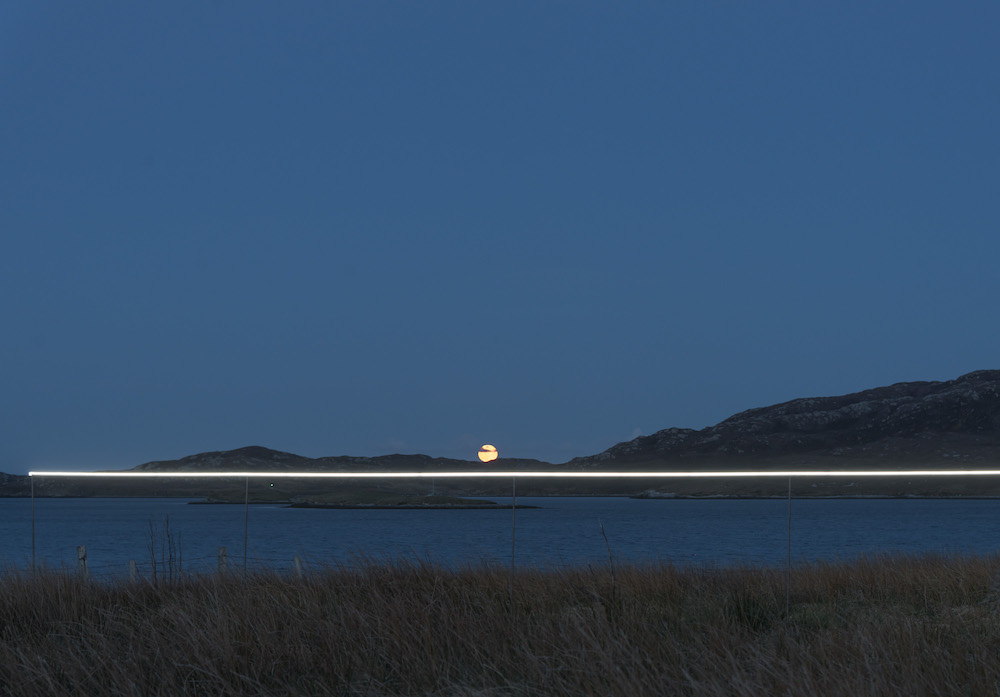
Pekka Niittyvirta and Timo Aho, Lines (57° 59′N, 7° 16’W), 2018-19, Taigh Chearsabhagh Museum & Arts Centre, image courtesy of Pekka Niittyvirta and Timo Aho
On the island of North Uist, in the Outer Hebrides archipelago on the northwest coast of Scotland, a site-specific installation shows the impact of future climate change with a visual reference to rising sea levels.
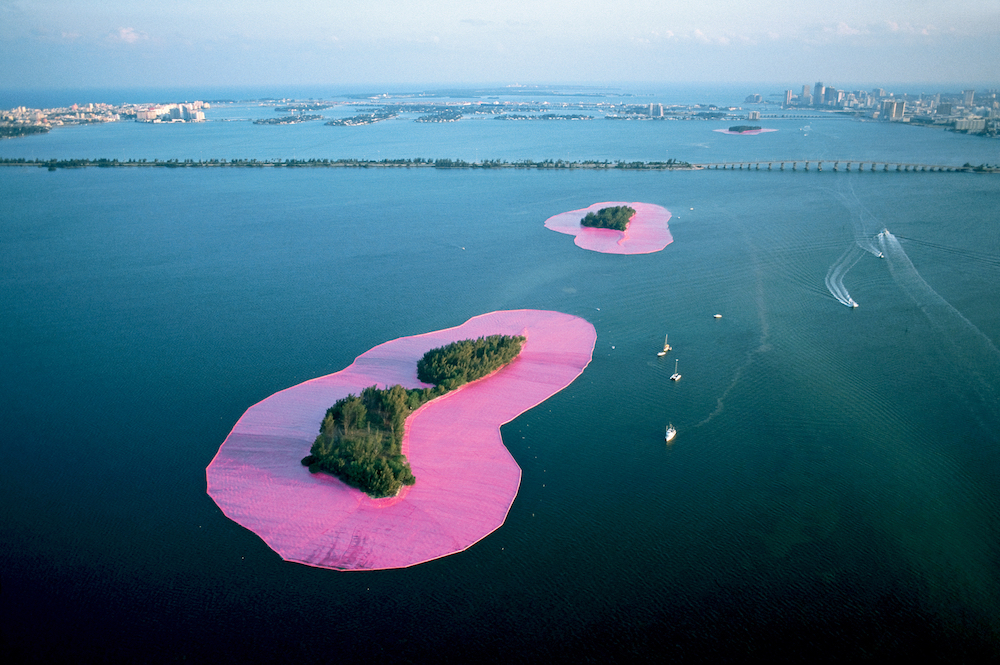
In May of 1983, eleven islands in Miami’s Biscayne Bay were surrounded with 6.5 million square feet of floating pink fabric. It was an incredibly vibrant spectacle – green islands, pink fabric, turquoise water, and blue skies – realized by the conceptual and environmental artists Christo and Jeanne-Claude. The project, Surrounded Islands, is the subject of an exhibition now at the Perez Art Museum Miami (PAMM).
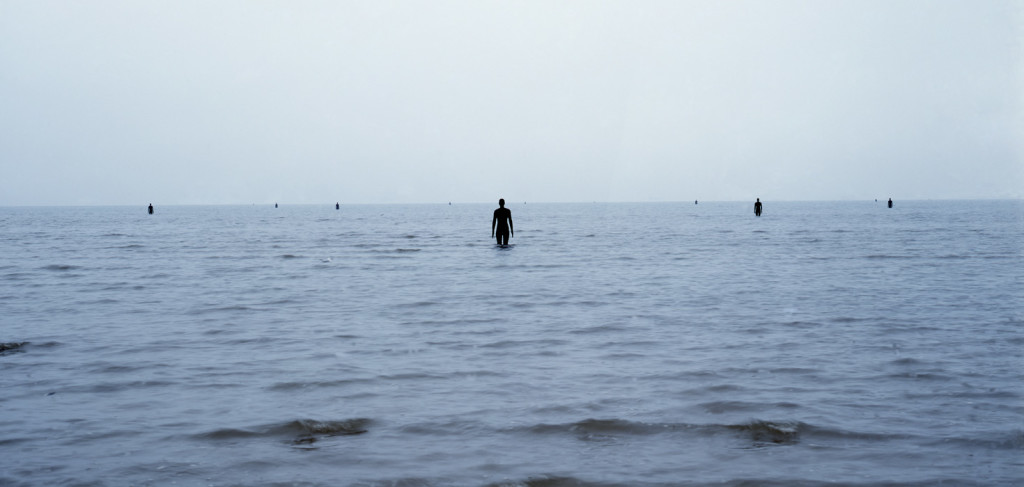
In 1997, in Cuxhaven, Germany, the British sculptor Antony Gormley installed ANOTHER PLACE, a sculpture comprised of 100 life-sized iron figures, along the coast between the North Sea and the mouth of the Elbe River. The figures were spread 2.5 kilometers down the coast and a kilometer out to sea, facing the horizon and becoming submerged with the tides each day in September and October of that year.
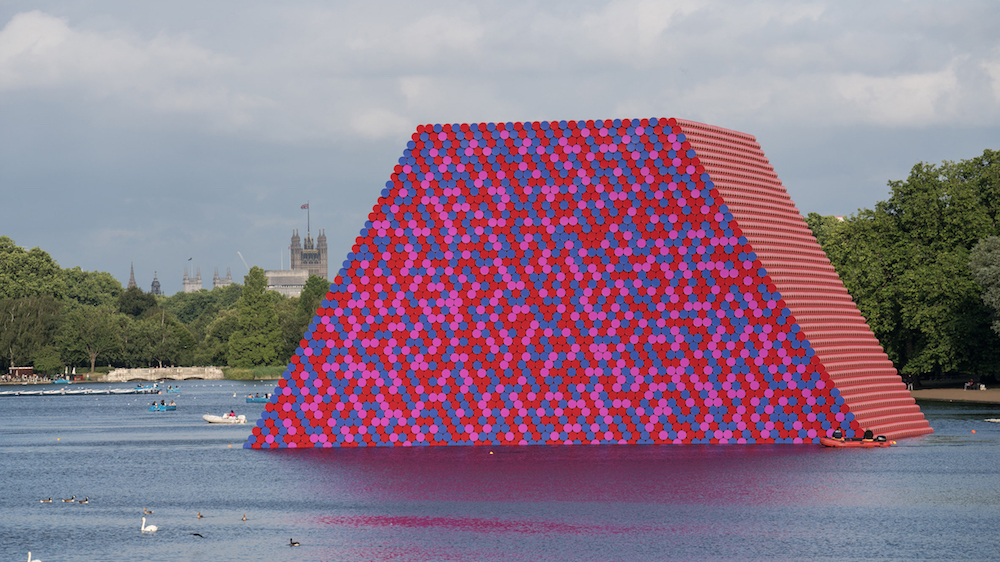
Christo and Jeanne-Claude, The Mastaba (Project for London, Hyde Park, Serpentine Lake), 2016-2018, photo by Wolfgang Volz
In London’s Hyde Park, a monumental form floating on the Serpentine Lake is a feat of engineering and a spectacle many years in the making. Titled The Mastaba (Project for London, Hyde Park, Serpentine Lake), it is a temporary installation by the conceptual and environmental artists Christo and Jeanne-Claude.
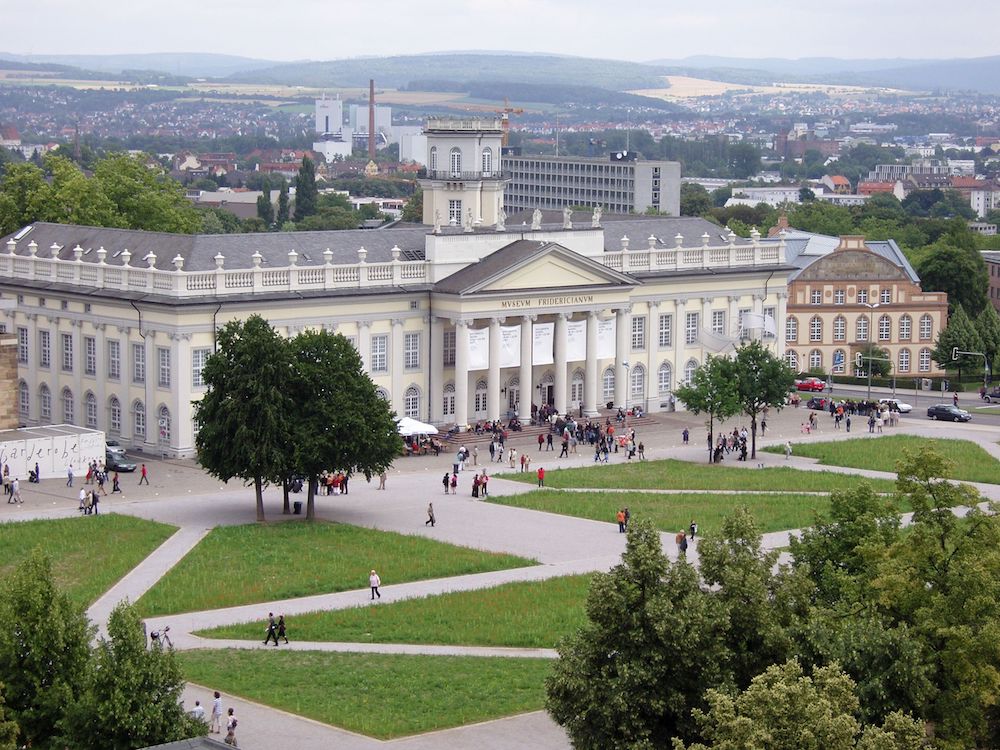
The Friedrichsplatz and Fridericianum, Kassel, Germany, photo by Carroy via Wikimedia Commons
Every five years in Kassel, Germany, documenta is a contemporary art exhibition lasting 100 days. Each edition presents hundreds of works in and around the city, typically conceptual and frequently site-specific. Of the thousands of works shown since the first documenta in 1955, sixteen have become permanent installations in Kassel.
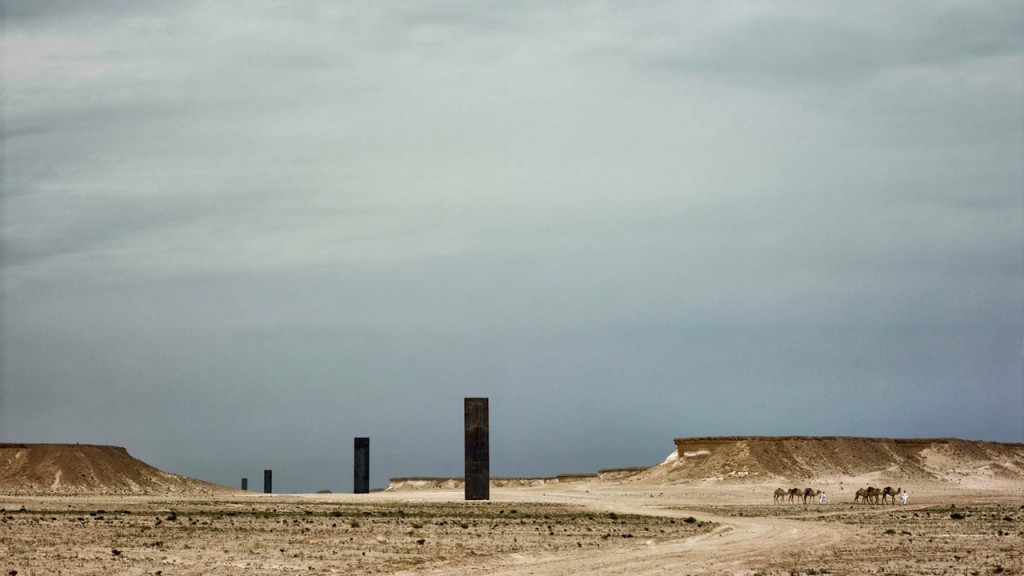
Richard Serra, East-West/West-East, image via Qatar Museums Authority
This spring, coinciding with his first major exhibition in the Middle East, American sculptor Richard Serra launched a public art commission in Qatar entitled East-West/West-East. Serra’s large-scale assemblies of sheet metal are famously minimal and massive, and this site-specific work in Qatar is absolutely monolithic.