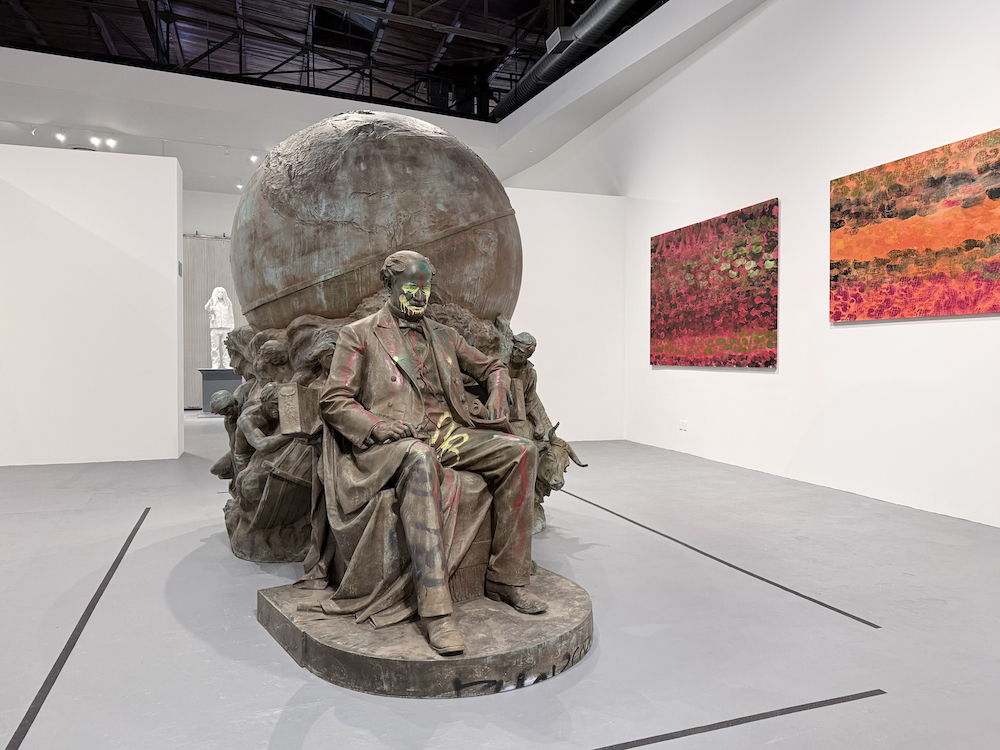
In 2021, a nonprofit public art, history, and design studio called Monument Lab undertook a comprehensive study of 48,178 monuments across the United States. They compiled a top 50 list of individuals represented, such as presidents and generals, and found that 50 percent of them had enslaved other people. The report identified 5,917 monuments to the Civil War, but fewer than one percent of those mentioned slavery or abolition, most often instead memorializing the “lost cause” myths of the Confederacy.
Among these, a 1921 bronze monument to the Confederate general “Stonewall” Jackson had stood in Charlottesville, Virginia, until it was decommissioned in 2021. It was acquired by The Brick, a nonprofit visual arts space in Los Angeles, and given to Kara Walker to create a new work of art for MONUMENTS, an exhibition co-organized and co-presented by The Brick and the Museum of Contemporary Art (MOCA).
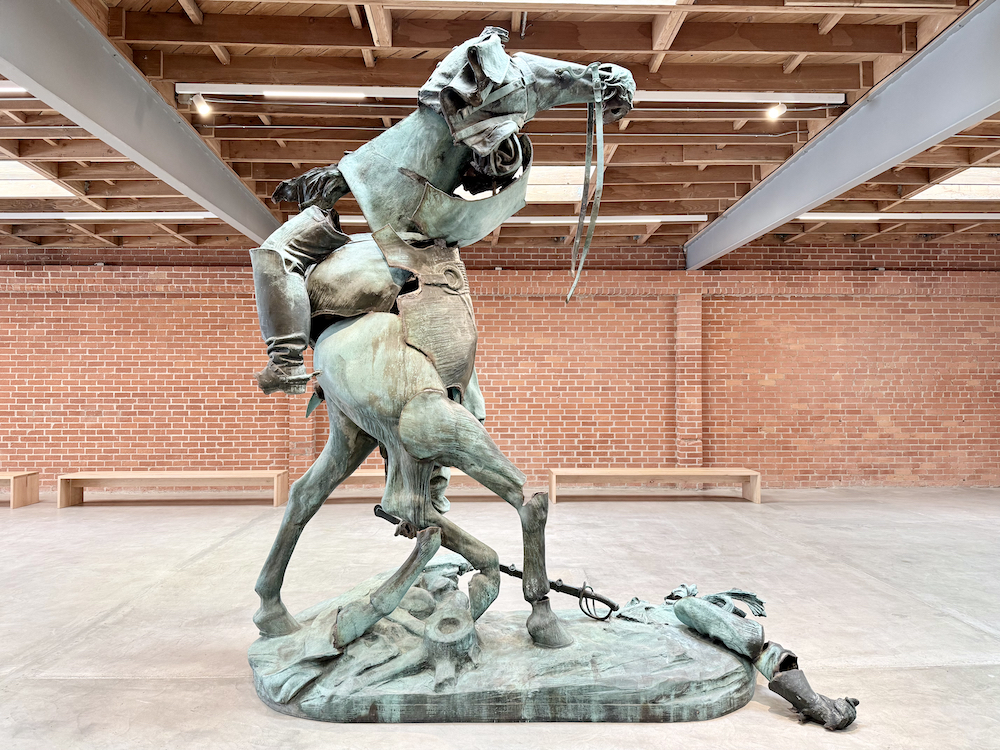
Walker’s sculpture is a deconstruction of Jackson and his horse, cut and welded and reassembled into a Cubist form. She has literally dismantled the monument, removing its original power and making its inherent horror visible as a headless monster, retitled Unmanned Drone, lost in a Civil War purgatory.
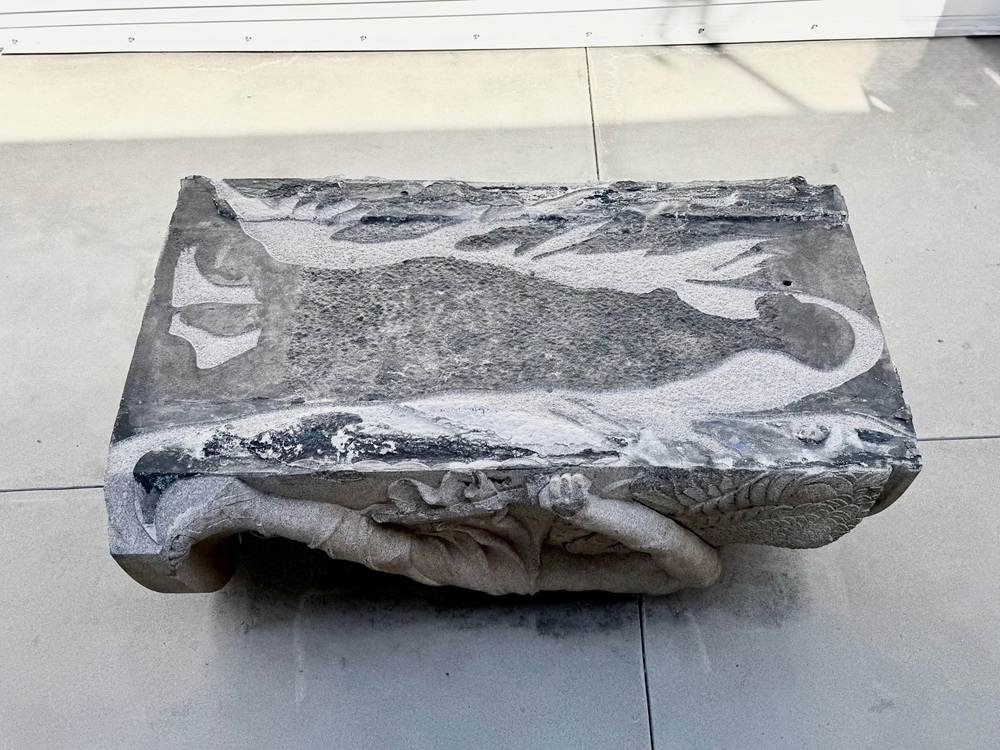
Outside the gallery, the original stone plinth is split open on the ground. Its high relief angels now face down, and Walker’s silhouette of a Black woman, freed from inside the stone, faces upward. The false narrative of the lost cause is broken.
Unmanned Drone is singular enough to stand alone, and it is the only work on view at The Brick. In a different neighborhood from the museum and with free admission, The Brick helps to decentralize the exhibition and remove institutional barriers.
At MOCA, the exhibition brings together contemporary works with decommissioned monuments to highlight myths and omissions that have shaped national identity and historical memory. Removing the monuments from their original outdoor contexts helps to deconstruct the narratives that they were designed to perpetuate.
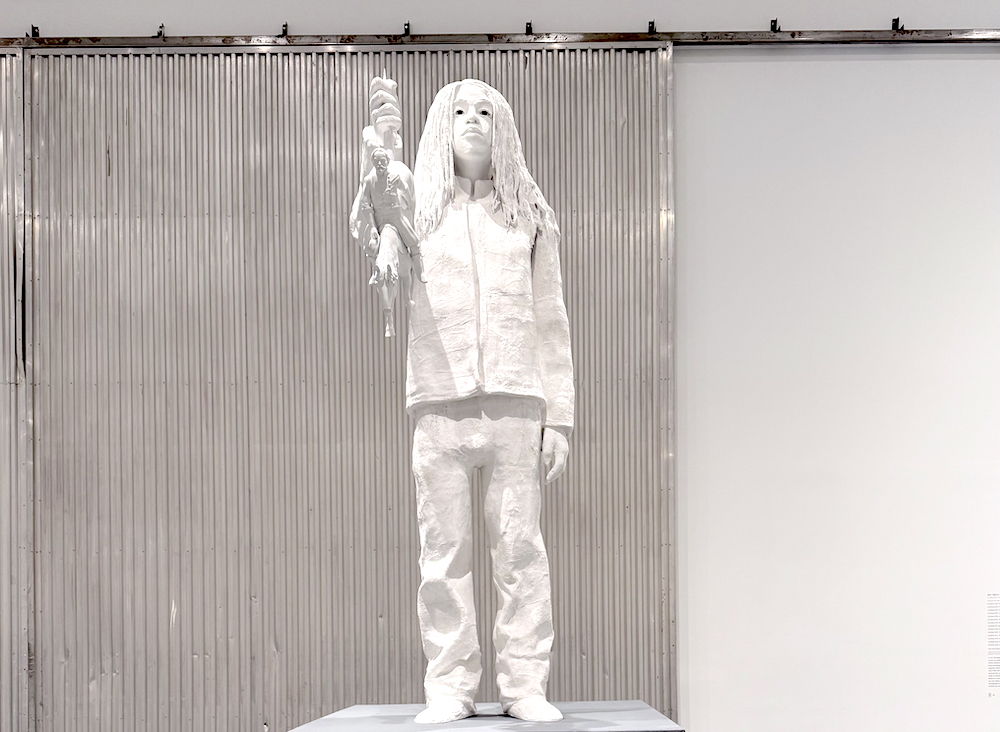
Inverting the historical monuments, Karon Davis’s Descendant is a sculpture of her own young son. Standing on a pedestal, he holds out a miniature replica of the statue of John Hunt Morgan, the plantation owner and Confederate general still memorialized in Kentucky, like a rat caught by the tail.
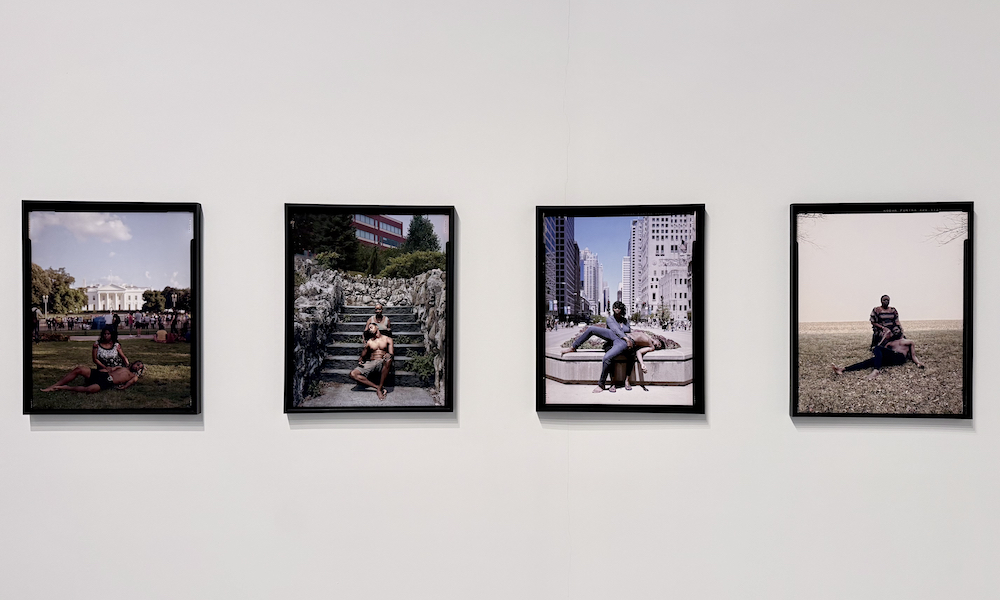
A 1917 monument of a woman cradling a Confederate soldier misappropriates the pietà—a specific form of sculpture in which Mary mourns the dead Jesus—in juxtaposition to Jon Henry’s contemporary photographs of Black mothers cradling their sons at locations where police have killed Black men.
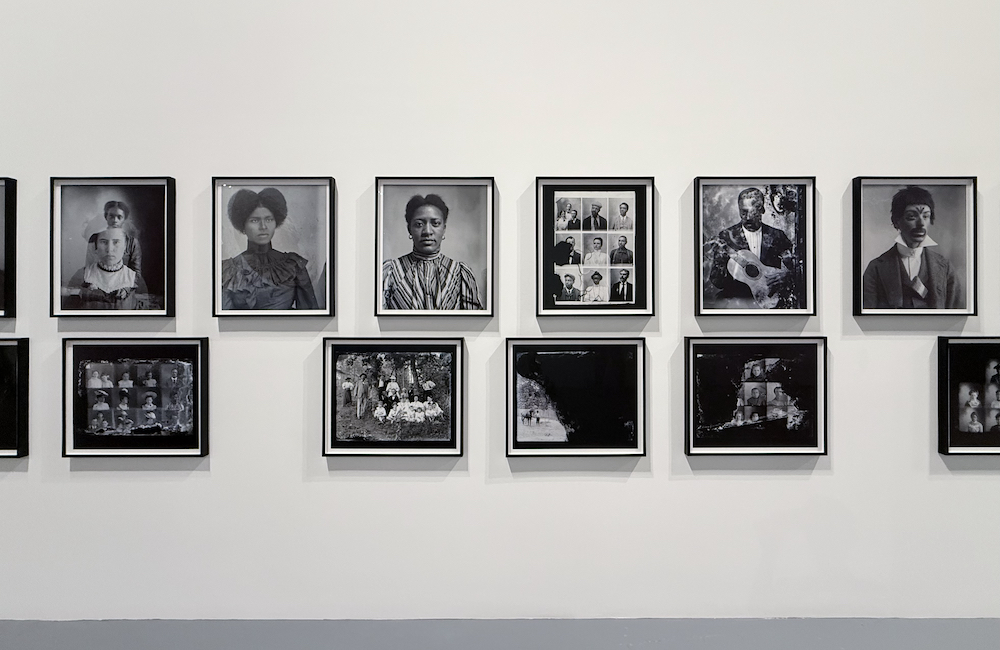
During the Jim Crow era, the traveling photographer Hugh Mangum captured portraits of both Black and white subjects on reused glass plate negatives. His multiple exposures reveal that many of the sitters, in the segregated South, had passed through his studio at the same time. These are portraits of the first generation born after slavery, a presence that monuments of the same era intended to suppress.
In the last decade, cities across the U.S. have decommissioned hundreds of Confederate monuments, recognizing a landscape that has perpetuated a harmful perversion of history. This exhibition provides a platform to historicize these removals, and to challenge and correct those narratives, towards a reconciliation that is long overdue.
MONUMENTS is on view at The Geffen Contemporary at MOCA and The Brick through May 3, 2026.